Mixteca
Hummingbird Cup
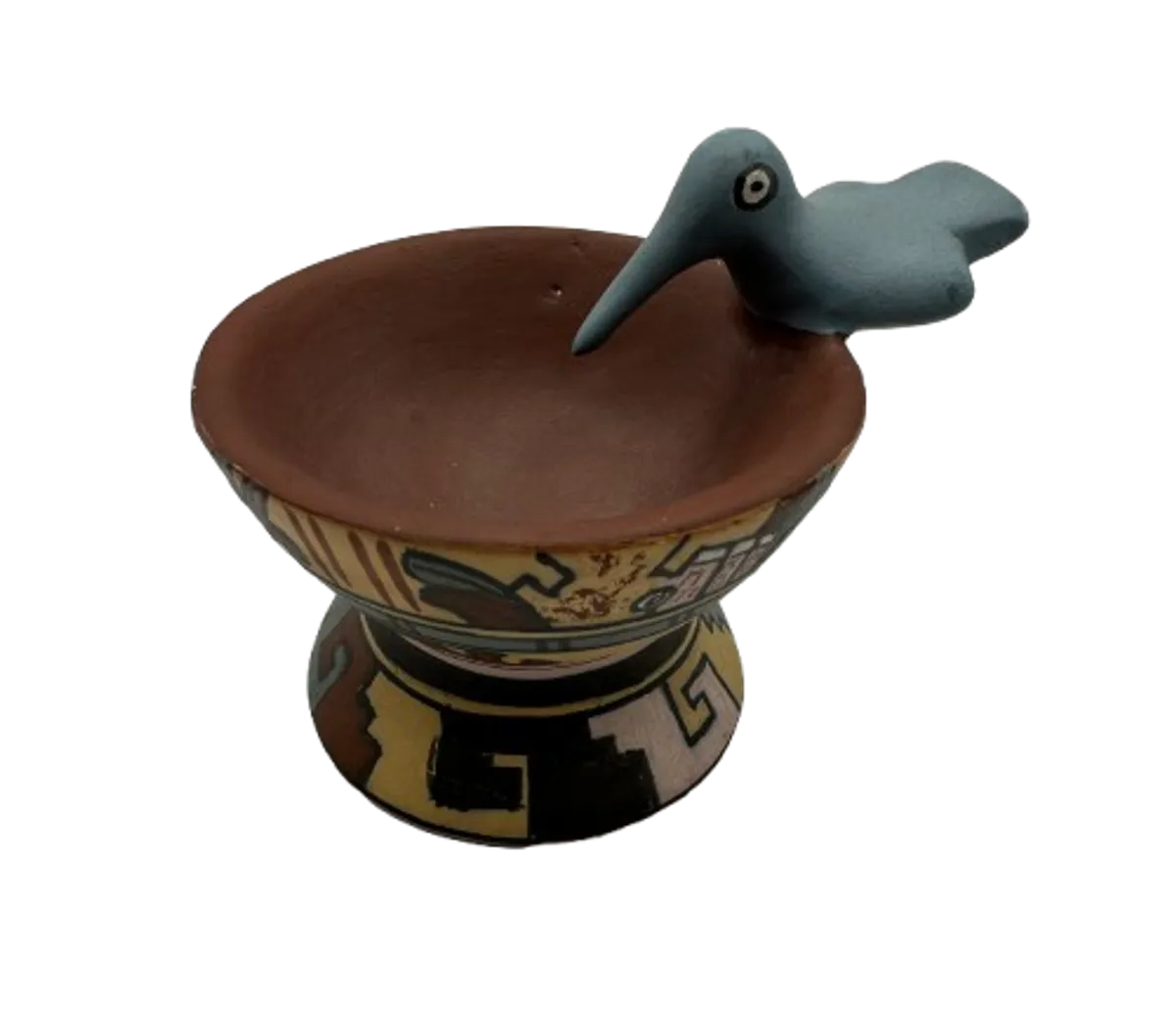
This delicate vessel features a hummingbird perched on a cup that could represent a flower. The cup is of the codex type, showing various symbolic designs with stepped fretwork representing serpents and alter ego animals of the gods: a jaguar, two eagles, and an opossum. It was deposited in tomb 1 of Zaachila, dated to 1225 AD.
Period
Posclásico (1225 d.C.)
Culture
Mixteca
Museum Location
Museo Nacional de Antropología
Museum Location
Zaachila, Valle de Zimatlán, Oaxaca
Technical Information
Craftsmanship Details
Archaeological Context
This piece represents the rich Mesoamerican artistic tradition, reflecting techniques and symbolisms that have endured through generations.
Discover the profound meaning and historical context of this extraordinary archaeological piece.
Cultural Context
Piece Description
This delicate vessel features a hummingbird perched on a cup that could represent a flower. The cup is of the codex type, showing various symbolic designs with stepped fretwork representing serpents and alter ego animals of the gods: a jaguar, two eagles, and an opossum. It was deposited in tomb 1 of Zaachila, dated to 1225 AD.
Historical Significance
The Mixtec civilization was one of the most culturally sophisticated in Mesoamerica, renowned for their exceptional craftsmanship in goldwork, ceramics, and codex painting.
Cultural Importance
Mixtec artisans created elaborate polychrome pottery, intricate bone carvings, and masterful metalwork that represented the pinnacle of Mesoamerican artistic achievement.
Mixteca
Cultural Legacy
The Mixtec artistic legacy endures through their codices, which are among the finest pre-Columbian manuscripts, and their goldsmithing techniques that influenced artisans across Mesoamerica.
Educational Resources
Explore more pieces from this fascinating Mesoamerican culture
Explore More