Mexica
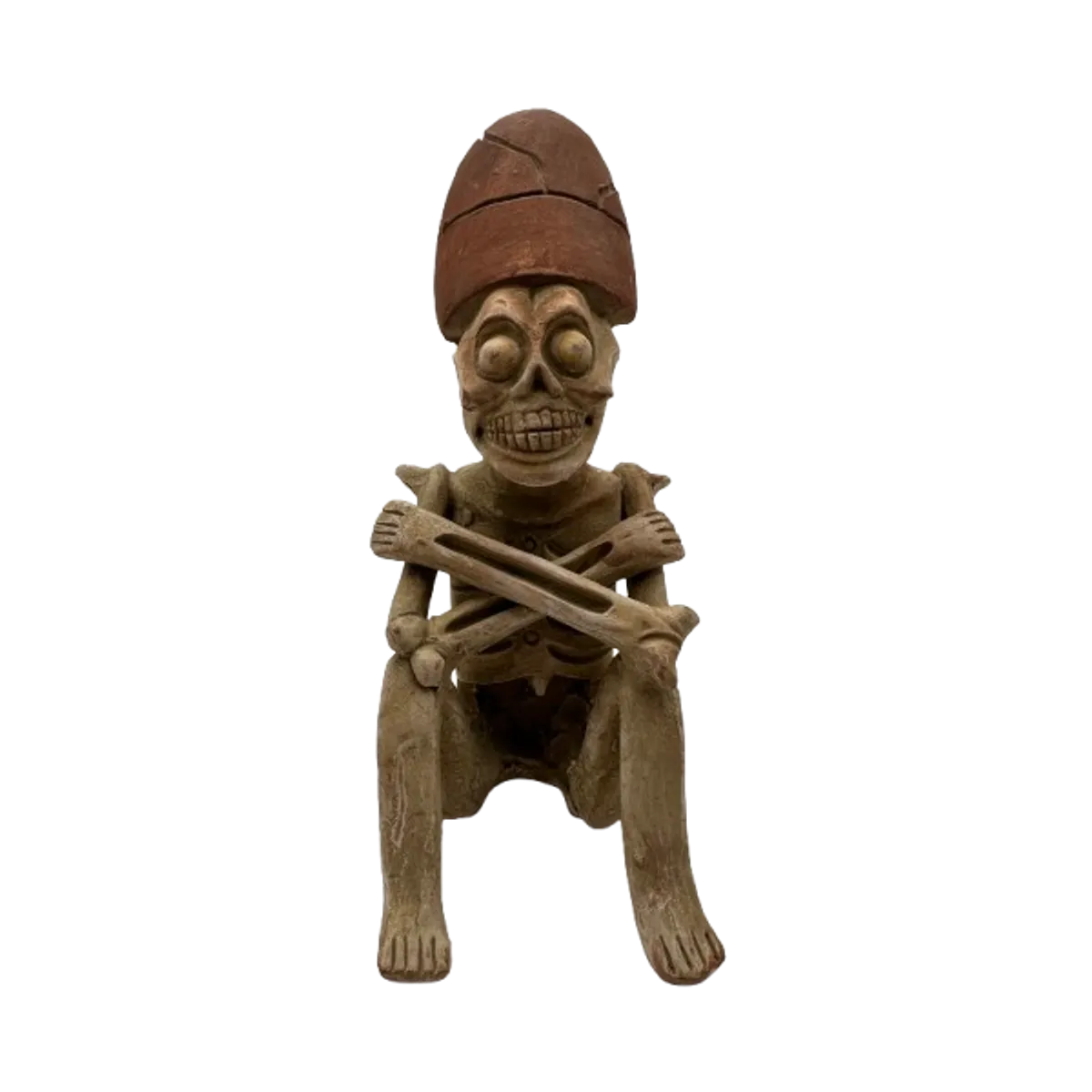
Mictlantecuhtli, God of Death
Stone representation of Mictlantecuhtli, the lord of the underworld in Mexica cosmology. The figure is shown frontally in a seated position with crossed arms, a distinctive feature of death deity representations. The skeletal face and elaborate headdress are iconographic elements that reinforce his identity as a deity of Mictlán, the realm of the dead. This representation is part of the rich Mexica sculptural tradition that sought to materialize fundamental cosmological and religious concepts.
Period
Posclásico Tardío (1325-1521 d.C.)
Culture
Mexica
Museum Location
Museo Nacional de Antropología
Museum Location
Mexico City
Technical Information
Craftsmanship Details
Archaeological Context
This piece represents the rich Mesoamerican artistic tradition, reflecting techniques and symbolisms that have endured through generations.
Discover the profound meaning and historical context of this extraordinary archaeological piece.
Cultural Context
Piece Description
Stone representation of Mictlantecuhtli, the lord of the underworld in Mexica cosmology. The figure is shown frontally in a seated position with crossed arms, a distinctive feature of death deity representations. The skeletal face and elaborate headdress are iconographic elements that reinforce his identity as a deity of Mictlán, the realm of the dead. This representation is part of the rich Mexica sculptural tradition that sought to materialize fundamental cosmological and religious concepts.
Historical Significance
The Mexica culture represented the pinnacle of political and artistic power in pre-Hispanic Mexico, creating works of great religious and social symbolism.
Cultural Importance
Their art combines naturalistic elements with geometric abstractions, reflecting their complex worldview and social structure.
Mexica
Cultural Legacy
Mexica techniques and motifs have profoundly influenced contemporary Mexican art and national cultural identity.
Educational Resources
Explore more pieces from this fascinating Mesoamerican culture
Explore More